


Fungal infection of the foot occurs through contact with a sick person or animal, as well as through soil, water or plants.It is important to recognize and treat the disease in time.
There are different types of foot fungus, and only a doctor can correctly identify the type by performing a series of tests.After that the specialist will prescribe a course that will allow you to quickly deal with the disease.
Intertriginous (interdigital) form.
This form of the disease is considered the most common.It is usually activated in the summer period.The development of the disease begins with lesions of the skin of the feet between the third and fourth, as well as the fourth and fifth toes, and then gradually spreads to all folds.The main symptoms of this fungus are:
- the appearance of cracks on the skin;
- the presence of a white border, which indicates the detachment of the upper layer of the skin;
- the appearance of weeping wounds;
- burning and itching sensation;
- formation of erosions at the site of cracks;
- loosening of the skin as the disease progresses and disruption of its protective functions.
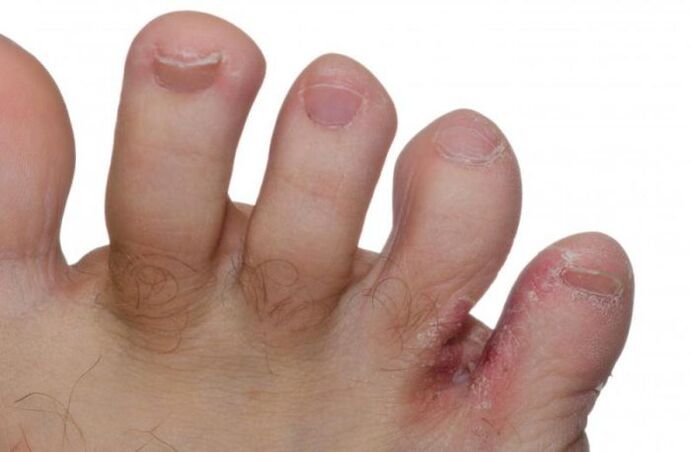
The interdigital form occurs in most cases against the background of the squamous form.This disease is treated with ointments.At the initial stage, you can do without the use of tablets.
An experienced specialist will tell you what fungi are and select effective therapy for your feet.Antifungal drugs will relieve the disease in one to three weeks.The main thing is not to forget to lubricate your feet with the prescribed medicine twice a day.
This form of the disease has a chronic course.It is not easy to determine this at the initial stage.Therefore, patients often consult a doctor when the disease is present in all the folds between the fingers.In this case, treatment may take longer.
Squamous-hyperkeratotic form
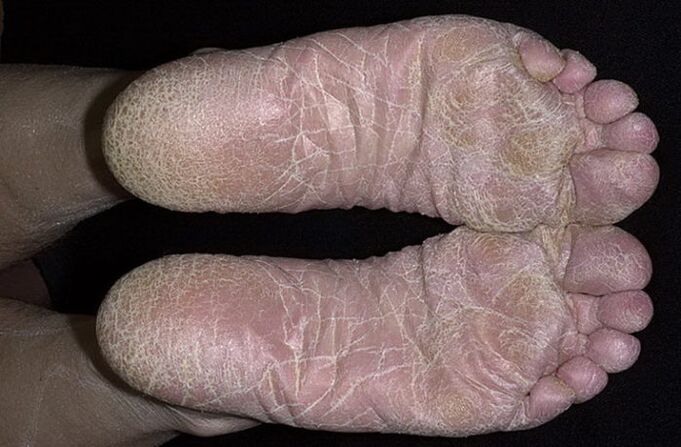
This disease in most cases affects one foot and, in the absence of adequate treatment, spreads to the other.The skin in this form of the disease undergoes radical changes.Keratinized cells completely cover the foot.The skin on the feet begins to become rough and then crack.In hyperchetarosis the heels are also subject to cracking.The appearance of erosions is accompanied by burning and itching.The patient feels pain.
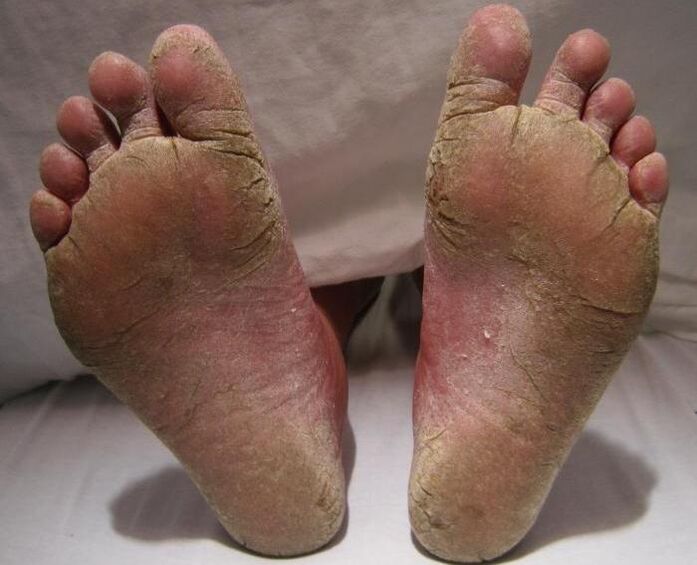
The main symptoms of the squamous-hyperkeratic form are:
- skin redness;
- itching and scaling;
- proliferation of keratinized cells;
- the appearance of rough calluses, including on the heels.
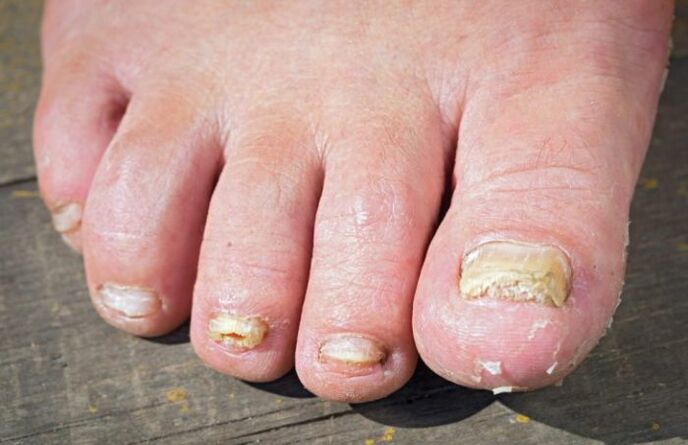
This disease can also affect the nail plate.Over time it loses transparency, changes shade and shape.In advanced stages, the nail often begins to crumble.Treating the disease at this stage is not easy.In this case, in addition to external remedies, the doctor may prescribe a course of pills.Combined drugs are mainly used for treatment.The duration of the course is determined by a specialist.Medications are selected based on the type of foot fungus the patient has been exposed to.
Dyshidrotic form
This form is also called vesicular.It is extremely rare.The disease is accompanied by the appearance of blisters or blisters of small diameter.At first they are solitary, but gradually they grow and burst.After which ulcers form.This disease is not easy to treat.It is complicated by the fact that viruses and bacteria easily penetrate the human body through cracks and erosions.Often diseases such as eczema, lymphadenitis and others with similar symptoms develop in parallel with the fungus.
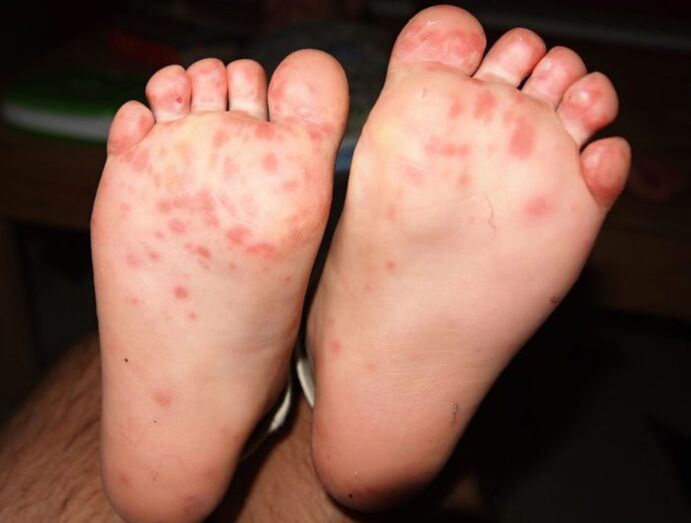
You should consult a specialist if the following signs of the disease are observed:
- pain and itching in the affected area of the feet;
- the appearance of erosions and cracks;
- severe peeling of the skin on the feet;
- the appearance of blisters or blisters on the skin.
Often, in the absence of adequate treatment, this disease takes a bacterial form.In this case, the transparent contents of the vesicles become purulent and cloudy.The patient develops severe headaches and increased body temperature.Treatment of this disease involves complex therapy.The doctor prescribes topical antifungal agents and tablets.
Canceled form
This type of disease is not immediately recognized.The fact is that the symptoms of the form are erased and practically do not bother the patient.A type of erased fungus is accompanied by a flour-like peeling of the skin.It seems that the foot is covered in very fine flour.Small cracks appear between the fingers, almost invisible to the eye.The person feels mild itching.There is no redness.
It is difficult to treat this form of the disease.Since the patient seeks qualified help only if the erased form develops into onychomycosis.Precious time is lost and recovery may take a long time.
Onychomycosis
In this case we mean a disease accompanied by a fungal infection of the nails.There are several varieties of this form of the disease:
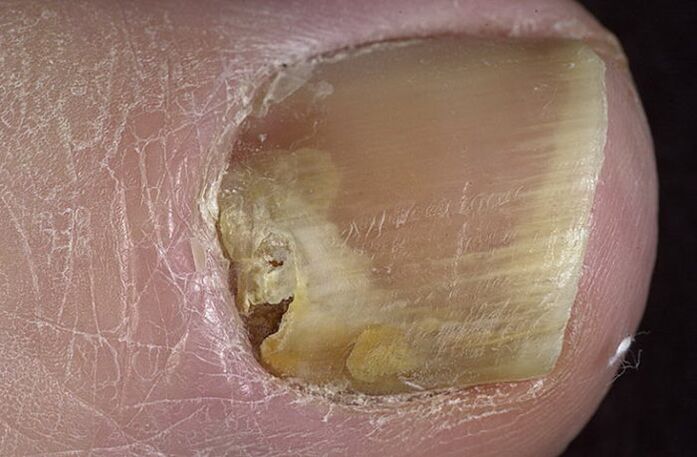
- mold damage;
- hypertrophic form;
- atrophic.
In the first case, the disease develops against the background of other lesions of the nails.Often the nail plate changes color, becoming black, green or brown.The nail bed becomes inflamed.
In the hypertrophic form of the disease, the plaque turns yellow and thickens.The nail breaks easily, revealing thickened, scaly skin.
With atrophic onychomycosis, the skin under the nail becomes rough and the plaque becomes thinner.If treatment is not started on time, the disease can completely destroy the plaque and nail bed.
Rubrophytia
This disease is also called rubromycosis.It is characterized by dryness and flaking of the skin and blood vessels.The disease develops gradually, practically without symptoms.Therefore, the wearer does not immediately notice it.A burning and itching sensation appears only in the later stages.At this stage the symptoms are as follows:
- the appearance of blisters and boils;
- plaques spread throughout the sole;
- pain when walking, appearing with an increase in the number of blisters.
A specialist will be able to prescribe treatment only after conducting a series of tests and studying the clinical picture.The microscopy performed allows you to determine what types of fungi exist and how they infect the feet.Treatment is carried out using exfoliating (keratolytic) agents.The specialist will prescribe an ointment or cream that contains salicylic acid.The course also involves the use of antifungal drugs.In advanced cases, tablets are used as an adjunct to therapy.If it is necessary to eliminate damage to the nails, special formulations are prescribed.
Candidiasis of the feet
This disease is quite rare.Fungi of the genus Candida, which contribute to the development of the disease, are present in the body of every person and are considered conditionally pathogenic.If they actively reproduce, unpleasant consequences are possible.The development of pathogenic fungi is often associated with a decrease in immunity, which develops against the background of regular stress and overwork of the body.Accidents at work or home or frequent use of closed shoes in summer can contribute to the onset of the disease.
Symptoms of candidiasis:
- hyperemia (overflow of blood vessels);
- separation of skin layers from each other;
- itching and scaling;
- the appearance of small flat blisters on the foot;
- pronounced swelling.
Drugs are prescribed individually, depending on the stage of the disease.As a rule, this is a complex therapy, including local and systemic drugs.
It is important to take preventative measures to avoid developing one of the forms of the fungus.They are quite simple:
- do not use someone else's shoes;
- do pedicures and manicures only with sterile instruments;
- choose comfortable shoes that allow your skin to "breathe".
By adhering to these simple rules, preventing the disease will not be difficult.